
Career guide
Why Choose a Nursing Career? A Guide for Students and Parents
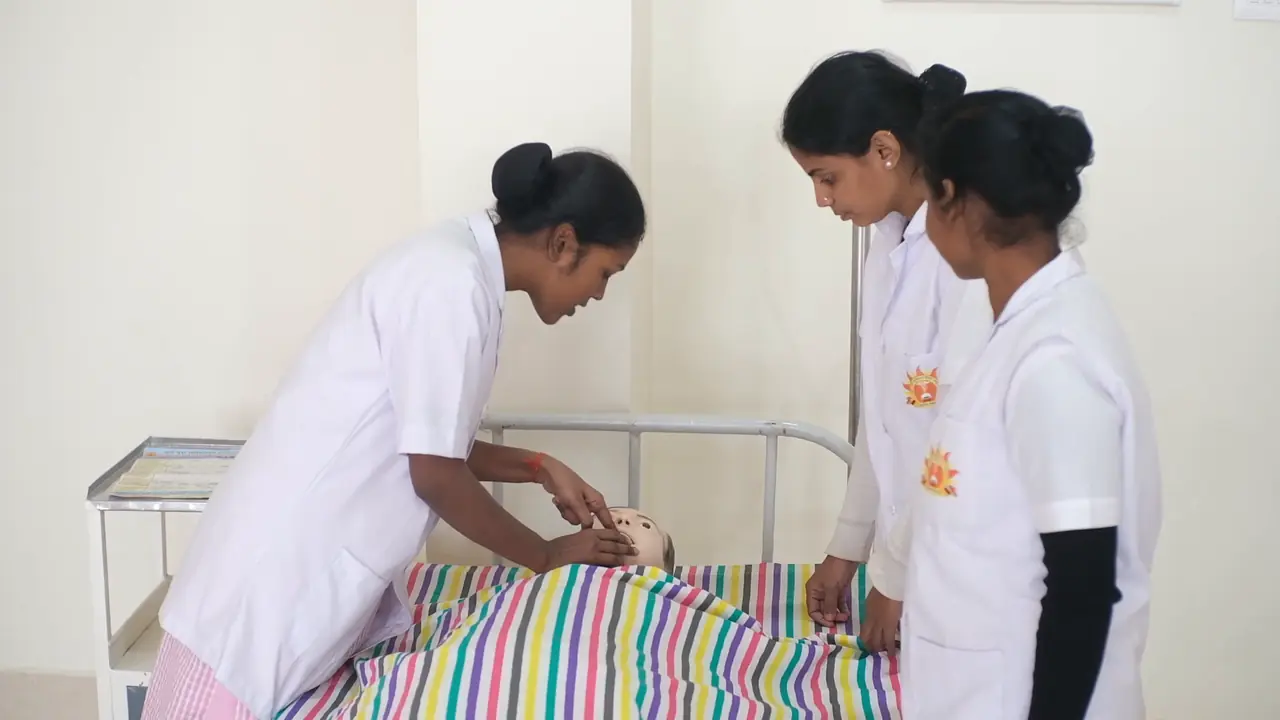
Choosing a course after 10+2 is one of the first big decisions a student makes, and families usually make it together. This guide is for both: what nursing work actually involves, the different ways into it, and what to think about before choosing.
What nurses actually do
Nurses are the people patients see most. Doctors diagnose and prescribe; nurses carry out much of the care that follows, and they notice when something changes. On a normal shift a nurse might give medicines, dress wounds, monitor a patient after surgery, help a mother through labour, explain a new diet to a diabetic patient, or calm a frightened child before an injection.
Outside hospitals, nurses run immunisation sessions, visit homes, keep health records for a village and teach families about hygiene and nutrition. In India, much of the everyday health system in rural areas depends on this work.
Why students choose it
The work is useful every single day
Few jobs let you see so directly that you helped someone. That feeling is the reason most nurses give for staying in the profession, even when shifts are long.
Healthcare is always needed
Every town needs health workers, in good years and bad. Hospitals, primary health centres, clinics, nursing homes, schools and industries all employ trained nurses. The skills are the same wherever you go, so a qualification can travel with you.
There is more than one path
Nursing is not a single job. After qualifying, nurses can work in wards, intensive care, operation theatres, maternity, paediatrics or community health. With further study, some move into teaching, supervision or hospital administration.
Which course fits you
Surya Nursing Educational College offers three programmes. The right one depends on your 10+2 subjects, your marks and the kind of work you want to do.
- ANM (Auxiliary Nurse & Midwife), 2 years. Focused on community and maternal health. Open to women aged 17 to 35 who have passed 10+2 in any stream. A common route into work at health sub-centres and in communities.
- GNM (General Nursing Midwifery), 3 years. Broad training in general nursing, midwifery and patient care, preparing students to work as staff nurses. Requires 10+2 with English.
- B.Sc Nursing (Basic), 4 years. A degree with a strong science foundation, which also opens the way to teaching, specialisation and leadership roles. Requires 10+2 with Physics, Chemistry and Biology.
The courses page lists the eligibility, age limits and career prospects for each.
What nursing asks of you
It is worth being honest about the demands, too. Nursing students study anatomy, physiology, pharmacology and more, and spend long hours in labs and hospital wards. Working nurses often do shifts, including nights. The job needs patience, a steady head in emergencies, and the ability to stay kind to people who are frightened or in pain.
None of this needs you to be exceptional on day one. These are skills that training builds. What helps most is caring about people and being willing to keep learning.
A note for parents
Parents usually want to know three things: is the course recognised, is the campus safe, and will it lead to work. Ask any college directly about each. At Surya Nursing Educational College, you can read about the approvals and affiliation, the hostel and campus safety, and the clinical training, and you are welcome to visit or call with questions.
Next steps
- Check which course your 10+2 subjects and marks make you eligible for.
- Watch for the J.C.E.C.E.B. entrance test notification. Admission to all three courses is through this test. See the exam schedule.
- Prepare for the test. Our exam preparation guide explains study methods that work.
- Talk to the admissions office about fees, the hostel and anything else you want to know.